USA
USA India
India APAC
APAC Middle East
 Global
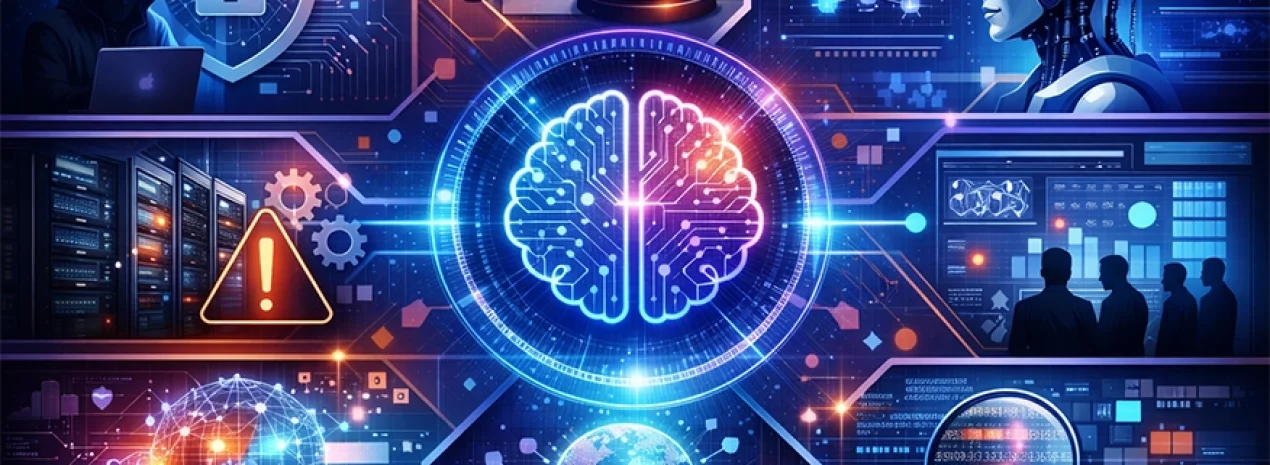
AI Security Training: 7 Critical Domains Organizations Need to Address AI Risks
The Problem: AI Is Scaling Faster Than Security Can Keep Up
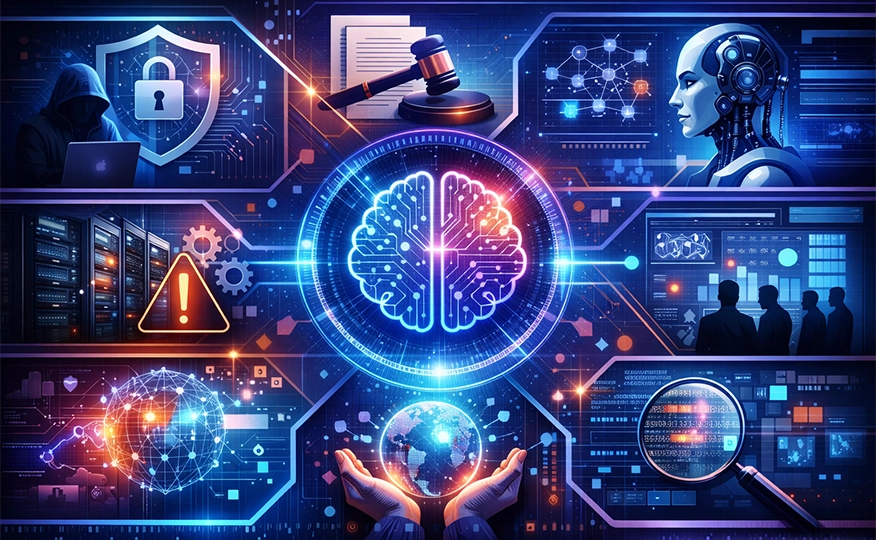
Artificial Intelligence is no longer experimental. It is now embedded across fraud detection, credit scoring, customer support, software development, threat detection, and enterprise decision-making. Yet as organizations rush to operationalize AI, security and governance capabilities are struggling to keep pace.
Traditional cybersecurity training was never designed for AI-specific risks. AI systems behave probabilistically, learn continuously, rely on massive datasets, and often function as opaque “black boxes.” This introduces a new category of risk—one that sits at the intersection of cybersecurity, data privacy, ethics, compliance, and operational resilience.
The result is familiar:
- Security teams protecting systems they don’t fully understand
- Risk teams assessing models that constantly evolve
- Leaders held accountable for AI outcomes without clear governance playbooks
This is why AI security training can no longer be generic or optional. It must be structured around real, emerging AI risks—and the domains required to manage them responsibly at scale. Industry-focused programs, including certifications like , are emerging to address this growing capability gap.
Below are the key domains every effective AI security training program should cover, based on how AI systems are built, deployed, attacked, and regulated.
1. AI Threat Landscape & Emerging Attack Vectors
AI systems introduce threat vectors that go far beyond traditional application security. Training must start by reframing how attacks occur in AI-driven environments.
Key risks include:
- Data poisoning and model manipulation
- Prompt injection and jailbreak attacks in GenAI systems
- Model inversion and extraction
- Adversarial inputs that alter AI behavior without detection
Without a clear understanding of how AI can be attacked, security teams often apply legacy controls that provide a false sense of protection. Effective AI security training builds intuition around how attackers think in AI-native environments and why conventional defenses fall short.
2. Data Security, Privacy & Model Integrity
AI systems are only as trustworthy as the data that trains and feeds them. One of the most underestimated AI risks lies in insecure data pipelines.
Training should cover:
- Securing training, validation, and inference data
- Preventing sensitive data leakage through AI outputs
- Managing data lineage, consent, and purpose limitation
- Protecting model integrity across the lifecycle
This domain connects AI security directly to privacy regulations and laws, making it essential for organizations operating in regulated environments.
3. Responsible AI & Ethical Risk Management
AI failures are not always technical. Many of the most damaging incidents stem from bias, lack of explainability, or unintended consequences.
AI security training must address:
- Bias and fairness risks in AI decision-making
- Explainability and transparency requirements
- Human-in-the-loop controls
- Accountability and escalation mechanisms
Responsible AI is no longer just an ethics discussion—it is a risk management requirement. Regulators increasingly expect organizations to demonstrate not just secure AI, but responsible AI.
4. AI Governance, Policies & Regulatory Alignment
From global frameworks to sector-specific guidelines, AI regulation is evolving rapidly. Training programs must help professionals translate regulatory expectations into practical controls.
This domain should include:
- AI governance structures and ownership models
- Policy frameworks for AI development and use
- Mapping AI risks to regulatory obligations
- Continuous oversight versus one-time compliance
Strong helps organizations move from checkbox compliance to governance models that scale with AI adoption.
5. Secure AI Architecture & Lifecycle Controls
AI systems do not exist in isolation. They are part of complex architectures involving cloud platforms, APIs, third-party models, and continuous updates.
Training should address:
- Secure-by-design AI architecture principles
- Risk assessment across the AI lifecycle
- Third-party and open-model risks
- Continuous monitoring and validation
This domain bridges the gap between AI engineers, security teams, and risk leaders—ensuring shared responsibility rather than siloed ownership.
6. Operational Resilience & Incident Response for AI
When AI systems fail, the impact can be fast and widespread. Traditional plans rarely account for AI-driven failures.
Effective training prepares teams to:
- Detect abnormal AI behavior early
- Respond to AI-specific security incidents
- Roll back or retrain compromised models
- Communicate AI-related incidents to stakeholders and regulators
This domain ensures organizations are not learning how to respond after a major AI failure occurs.
7. Skills Enablement Across Roles
One of the biggest challenges with AI security is that responsibility is distributed. Developers, security teams, compliance leaders, and executives all play a role.
High-impact AI Security Training is designed to:
- Build shared understanding across functions
- Translate technical risks into business impact
- Enable informed decision-making at leadership levels
Programs like reflect this shift—focusing not just on theory, but on practical, role-aware AI security and governance capabilities aligned with real-world risk scenarios.
Why These Domains Matter
AI risks are systemic. Addressing them requires more than point solutions or isolated workshops. Organizations need structured training that covers the full spectrum—from technical vulnerabilities to governance and accountability.
The right AI security training:
- Reduces blind spots in AI adoption
- Strengthens regulatory readiness
- Builds confidence in scaling AI responsibly
- Turns AI risk into a managed, measurable discipline
As AI continues to reshape how businesses operate, investing in comprehensive AI security education is no longer about staying ahead—it’s about staying in control.
To know more about SISA’s AI Training programs, click here. To gain insights into AI Governance in Banking, watch our latest webinar.
Latest
Blogs
Whitepapers
Monthly Threat Brief
Customer Success Stories






 Facebook
 Linkedin
  X
X Youtube